Bodyweight training
training program
No gym? No problem. Build real athletic strength, power and conditioning with nothing but your bodyweight — built for young and aspiring athletes.
Your first month is free, with nothing to pay today. Then A$24.99/month, cancel any time. On the App Store and Google Play.
Train Smart’s bodyweight training program is a complete weekly plan built around the days and equipment you have. It trains relative strength, explosive power and athletic conditioning, progresses the reps and difficulty of every set, runs four-week blocks that build and then deload, and retests you every four weeks on Max push-ups and Standing broad jump, plus the conditioning benchmark your running plan is built around.
Why this program exists
No gym, no money for one, or too young to be under a barbell — and every program assumes you have all three.
Real athletic strength, power and conditioning with nothing but your bodyweight. The progression is the same as the barbell programs: reps and difficulty climb through a four-week block, then deload. Built with younger and aspiring athletes in mind.
A default bodyweight training week
This is the sport’s own template — the starting point before it is fitted to your days, your equipment and your season. Team nights and game day are protected; everything else moves to the days you are free.
What bodyweight training is won with
These are the qualities the program is built to develop, in priority order. They come from the sport, not from a generic template.
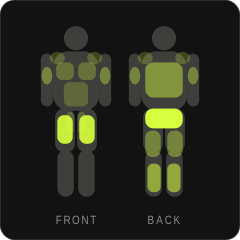
- Relative strength
- Explosive power
- Athletic conditioning
- Core control
| Session | Type | Duration | Focus |
|---|---|---|---|
| Lower Strength + Power | Gym | 35–45 min | Powerful, durable legs — no weights needed |
| Athletic Conditioning | Conditioning | 25–40 min | Build the engine with zero equipment |
| Upper Push + Pull | Gym | 35–45 min | Upper-body strength using your own weight |
| Athletic Power + Core | Gym | 35–45 min | Speed, spring and a rock-solid midline |
The bodyweight training testing battery
Five numbers, re-run every four weeks. Chosen to match what bodyweight training programs actually measure — and the results re-price your training weights and reset your conditioning paces.
| Test | Measures | Unit |
|---|---|---|
| 2km time trial | The aerobic benchmark your program is built around. | mm:ss |
| Max push-ups | Pressing endurance and trunk control with no kit required. | reps |
| Max pull-ups | Relative pulling strength — the best upper-body number there is for a field athlete. | reps |
| Standing broad jump | Horizontal power — the direction you actually accelerate in. | cm |
| Standing vertical jump | Lower-body power in its purest form, and the cheapest fatigue check you own. | cm |
What is actually in a bodyweight training program
Every movement below appears in the sessions above, with the coaching cues the app shows you, the sets and reps it is prescribed at, and ranked alternatives if you cannot do it. The weight is calculated from your own last top set.
| Movement | Appears in | Why it is there | Trains |
|---|---|---|---|
| Hollow Hold | Athletic Power + Core | The braced core every line comes from | Abs / Core |
| Kettlebell Swing | Athletic Power + Core | Repeatable hip-extension power that also banks conditioning | Hamstrings · Glutes · Back |
| Lateral Bound | Athletic Power + Core | Change-of-direction power | Quads · Glutes · Calves |
| Loaded Adductor Frog Hold | Athletic Power + Core | Deep abduction and adductor length held long enough to change it — the base position for guard work, low blocks and wide bases | Groin / Adductors |
| Sissy Squat — bottom hold | Athletic Power + Core | Loads the quad and the knee in full flexion — the position a deep landing, a lunge for a ball or a low turn puts it in | Quads |
| Sprint | Athletic Power + Core | Top-end speed — the most athletic quality there is | Hamstrings · Glutes · Quads · Calves |
| Tuck Jump | Athletic Power + Core | Reactive power + fast feet | Quads · Glutes · Calves |
| Weighted Pigeon Hold | Athletic Power + Core | External hip rotation at full length under load — what a deep lunge, a turn-out and a guard position all run out of | Glutes |
| Broad Jump | Lower Strength + Power | Horizontal shot power on the double-leg | Quads · Glutes · Calves |
| Bulgarian Split Squat | Lower Strength + Power | Single-leg power + change of direction | Quads · Glutes |
| Copenhagen Hold (long) | Lower Strength + Power | Adductor strength at full length — groin strain is a top-three injury in every cutting sport, and this is the position it happens in | Groin / Adductors · Abs / Core |
| Front Squat | Lower Strength + Power | Quad and trunk strength in the upright posture sport actually loads | Quads · Glutes |
| Nordic Curl (or Sliding Leg Curl) | Lower Strength + Power | Hamstring strength that prevents the #1 athletic injury | Hamstrings |
| Nordic Hamstring Lower | Lower Strength + Power | The most-evidenced hamstring exercise there is, done as a slow lower into a hold rather than a fall | Hamstrings |
| Reverse Nordic — hold at length | Lower Strength + Power | Quad and hip-flexor length under load — the other half of the Nordic, and the range a sprinter runs out of first | Quads |
| Single-Leg Hip Thrust | Lower Strength + Power | Glute + hamstring strength for sprint power | Glutes |
| Squat Jump | Lower Strength + Power | Explosive leg power for jumping + sprinting | Quads · Glutes · Calves |
| Trap Bar Jump | Lower Strength + Power | A loaded jump — peak power output with no barbell skill to learn first | Quads · Glutes · Calves |
| Chin-Up (or Band-Assisted) | Upper Push + Pull | The best test of upper-body relative strength | Back · Biceps |
| Dip — bottom stretch hold | Upper Push + Pull | Pec and front-shoulder length under real load — the range a press never visits and a fall or a hand-off finds immediately | Chest · Triceps |
| Eccentric Chin-Up — dead-hang finish | Upper Push + Pull | Loads the elbow and biceps tendon at full length under control — the tendon that complains in every grappling, climbing and bar sport | Back · Biceps |
| Incline DB Press | Upper Push + Pull | Upper strength for shielding the ball | Chest · Triceps |
| Inverted Row (under a table or bar) | Upper Push + Pull | Back + biceps strength — no bar? use a sturdy table edge | Back · Biceps |
| Pike Push-Up | Upper Push + Pull | Overhead pressing strength for handstands | Shoulders · Triceps |
| Push-Up | Upper Push + Pull | Upper strength for lifts + partner work | Chest · Triceps |
| Seated DB Shoulder Press | Upper Push + Pull | Overhead strength for contests, marks and intercepts | Shoulders |
| Weighted Dead Hang | Upper Push + Pull | Decompresses the spine and loads the shoulder at full overhead range — the cheapest overhead flexibility work there is | Back · Biceps |
Staying available
The prehab block is matched to the region of the session it sits in and to the tissue this sport actually punishes — not a generic mobility flow bolted to the front.
Prehab only works if it happens, and the reason it usually does not is that it has nothing to do with the session it is attached to. Rotating a pool by session number puts shoulder work before a squat day and Copenhagen planks before a bench press. Technically covered; nobody does it.
In Train Smart each movement is classified by the region it protects and matched to the session, and the pool rotates across the week so you cover all of it rather than doing the same three moves three times.
More on prehab that people actually do →
What the free month covers, and what comes after
The first month is one complete four-week block — three building weeks and a deload. The first retest comes after that block, and it is the first time the program measures what your training did.
- Week 1
- Testing session on the bodyweight training battery. Your starting weights and paces come from it.
- Weeks 1–3
- The first block builds. Hit your reps and the weight goes up on its own.
- Week 4
- Deload — the week the previous three become fitness.
- Week 5
- Retest. The results re-price your weights and reset your conditioning paces.
- Weeks 5–8
- Block two changes shape, priced from the top sets you just did and the numbers you just tested.
Bodyweight training training questions
What does the Train Smart bodyweight training program include?
Can I follow this program if I only train twice a week?
What tests does the bodyweight training program use?
Do I need a full gym?
Related
Get your bodyweight training program
Pick bodyweight training, answer eight questions, and your week is built — around your team nights, your game and the days you can actually train.
Your first month is free, with nothing to pay today. Then A$24.99/month, cancel any time. On the App Store and Google Play.
- Install itFree to download on iPhone and Android.
- Tell it how you playYour sport, your season, the nights you train and the kit you have. No account needed.
- See your week, then start freeYour program is built before you pay anything. Start the free month to unlock it, and cancel any time in your store settings.